Work in Progress!
I am currently working on a larger project that takes a more scientific and empirical approach to the study of moral behavior as it spreads through digital environments.
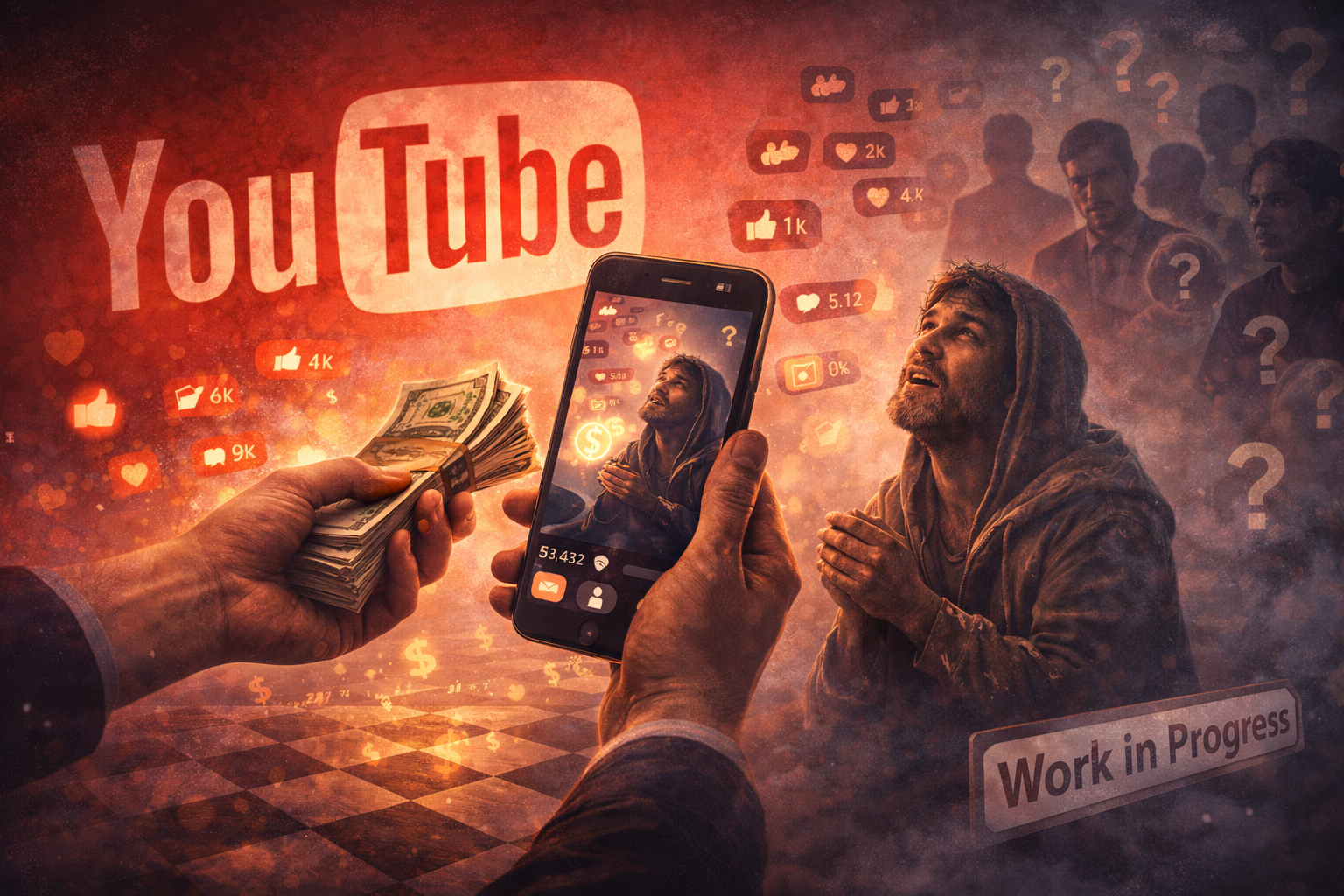
The central focus of this project is YouTube, a platform where moral behavior can spread rapidly through visibility and imitation, but where it can also lose credibility and disappear just as quickly. The primary example I will examine is the emergence of videos in which individuals film themselves donating money to people in need.
These videos often begin as viral moments: acts of apparent kindness that are widely praised, shared, and replicated. Over time, however, the format becomes increasingly common and standardized. Public perception shifts. Viewers begin to question the authenticity of these acts, suggesting that creators may be earning more money, attention, or status from filming the donation than the recipient gains from the act itself. The moral behavior is increasingly dismissed as performative or self-serving rather than ethically motivated.
As this skepticism grows, the behavior loses moral credibility and declines in perceived value. Despite this, individuals continue to adopt the format, attracted by the possibility of short-term reputational or economic rewards. While the ethical grounding of the act erodes, the archetype itself, publicly donating money to the unfortunate, persists.
Observing this pattern led to the formulation of the following research question:
What role do reputational incentives play in shaping the ethical interpretation, authenticity thresholds, and evolutionary persistence of moral behavior memes as they spread through digital environments?
To explore this question, the project is guided by the following sub-questions:
- How is ethical grounding communicated and interpreted as moral behavior memes scale?
- At what point does reputational signaling undermine perceived authenticity?
- What indicators precede the decline of a moral behavior meme?
- How do short-term reputational incentives sustain the replication of moral behavior memes that may be maladaptive in the long term?
Underlying Thought Process
Moral behavior, when observed by others, can become socially advantageous, increasing social status, reputation, and praise. These social rewards may increase the likelihood that the behavior is replicated.
When replication is successful, the behavior may become embedded as a meme or archetype, for example: publicly donating money to the unfortunate, capturing the moment, and publishing it through social media.
As individuals adopt this archetype, the ethical grounding of the behavior may weaken. The moral value of the act risks being displaced by the pursuit of reputational rewards. What initially appears as altruistic behavior becomes increasingly instrumental.
As this motivational shift becomes visible, the behavior may lose social approval. What once generated praise can begin to provoke skepticism, criticism, or reputational harm. Nevertheless, the behavior continues to be reproduced, as it may still function as a viable strategy for short-term reputational or economic gain, even as its long-term moral and cultural viability declines.