Welcome to the Book Recommendations!
All books featured on this page have been personally read and carefully selected. Each recommendation is based on the book’s content and the experience it offers, explaining why it may be valuable to read.
You can support Discourse Between by using the links provided with the books. These links are affiliate links, which means a small commission may be earned if a purchase is made — at no extra cost to you. Any earnings are used to support, maintain, and improve this website.
Feel free to explore the Roadmap to see what we are working towards.
Let’s inspire and spark some curiosity!
Affiliate links
- Benelux Delivery
- Global Delivery
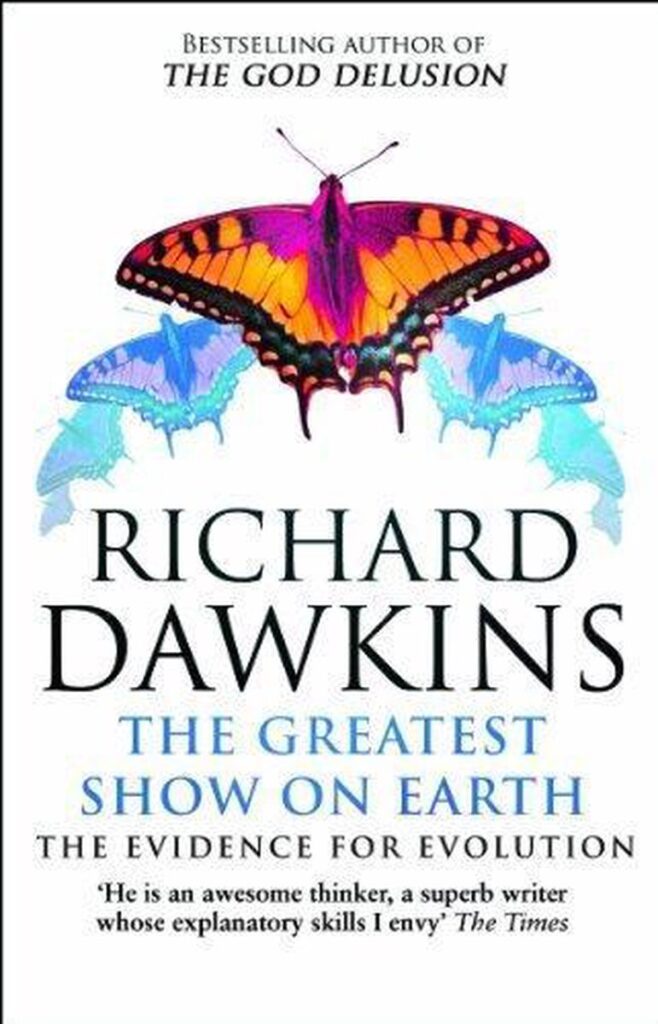
The Greatest Show On Earth by Richard Dawkins
Introduction
The Greatest Show on Earth by Richard Dawkins explains the evidence for evolution and how life on Earth has changed over billions of years through natural selection. Dawkins addresses common misunderstandings and challenges to evolution, showing how fossils, genetics, anatomy, and observed evolutionary changes all support the theory. The book’s main aim is to demonstrate that evolution is a well-supported scientific fact, not just a theory, and to help readers understand how the diversity of life arose without the need for supernatural explanations.
Why this book is recommended
Richard Dawkins presents a strong and compelling case for why evolution is not only true, but profoundly beautiful. Through its imperfections and ingenious solutions, life continually adapts through natural selection. He concludes this view with an absolutely wonderful quote by Charles Darwin:
‘There is grandeur in this view of life, with its several powers, having been originally breathed into a few forms or into one; and that, whilst this planet has gone cycling on according to the fixed law of gravity, from so simple a beginning endless forms most beautiful and most wonderful have been, and are being, evolved’
Book recommendation by writer Man of the House
Affiliate links
- Benelux Delivery
- Global Delivery
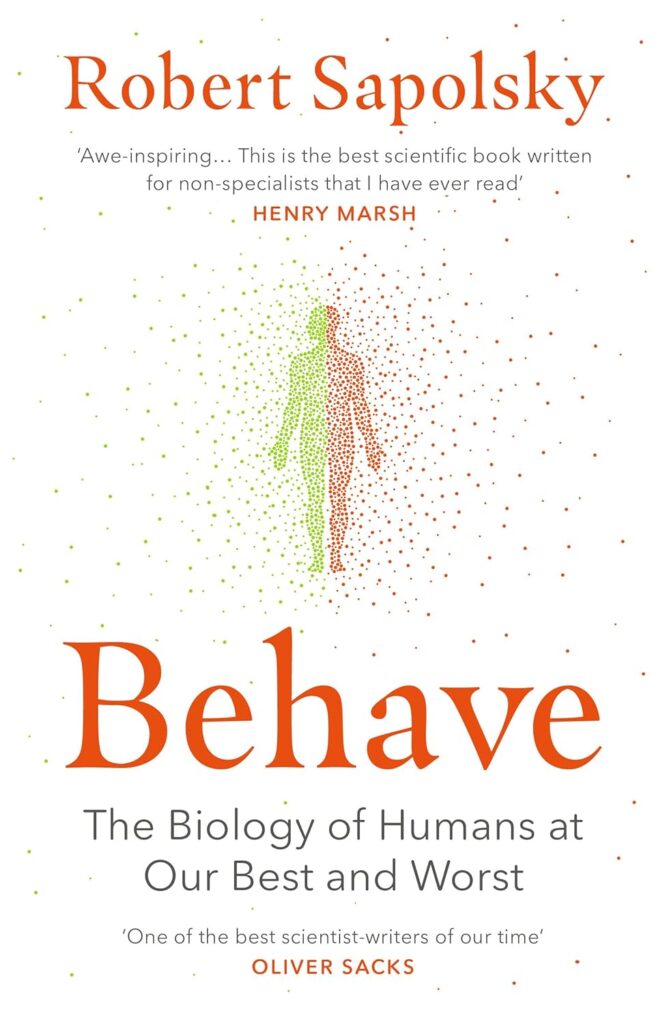
Behave: The Biology of Humans at Our Best and Worst by Robert M. Sapolsky
Introduction
Behave: The Biology of Humans at Our Best and Worst by Robert M. Sapolsky is a fascinating and thought-provoking exploration of why humans do what they do. Blending neuroscience, psychology, biology, and sociology, Sapolsky examines human behavior from multiple time scales—from what happens in the brain a second before an action to the evolutionary and cultural forces shaped over thousands of years. The book is both deeply scientific and highly accessible, making it an excellent recommendation for readers interested in human nature, morality, aggression, empathy, and the science behind our best and worst actions.
Why this book is recommended
If you’re interested in social science, Behave: The Biology of Humans at Our Best and Worst by Robert M. Sapolsky is a must-read. One of the most frequently discussed topics in social science is the debate between nature and nurture, and this book offers a remarkably nuanced perspective on that question. Sapolsky explores how human behavior is shaped by a wide range of factors, including brain activity, hormones, emotions, culture, environment, and evolution, helping you understand how learned and innate behaviors interact.
While reading, I highly recommend taking the time to go through the appendix as well, even if you are already familiar with the subject. It contains valuable background information that greatly enhances your understanding of the chapters. Although it is a substantial book, it is absolutely worth the investment.
Book recommendation by writer Man of the House
Affiliate links
- Benelux Delivery
- Global Delivery
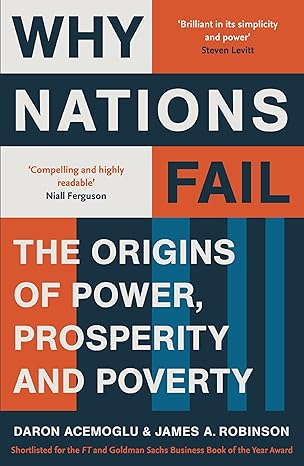
Why Nations Fail: The Origins of Power, Prosperity and Poverty - Daron Acemoglu & James A. Robinson
Introduction
Few books challenge the way we think about wealth, inequality, and global success as powerfully as Why Nations Fail by Daron Acemoglu and James A. Robinson. Blending history, economics, politics, and sociology, the authors explore one of humanity’s biggest questions: why do some nations thrive while others remain trapped in poverty?
Rather than blaming geography, culture, or luck, the book argues that the true difference lies in institutions. Nations prosper when they build inclusive political and economic systems that encourage participation, innovation, and opportunity. In contrast, extractive systems concentrate power and wealth in the hands of a few, often limiting growth and keeping societies stagnant.
Through compelling examples ranging from ancient civilizations to modern states, Why Nations Fail offers a thought-provoking perspective on power, prosperity, and the structures that shape human progress. It is an essential read for anyone interested in economics, history, politics, or understanding the forces that continue to influence the world today.
Why this book is recommended
Why Nations Fail by Daron Acemoglu and James A. Robinson showcases the power of institutions, the decision-making of leaders during critical junctures, and how something as simple as a wall can divide similar groups of people into poverty and prosperity.
This book will help you understand power, prosperity, and poverty from a broader macro-oriented perspective, backed by Nobel Prize-winning research. However, for readers who recognize patterns quickly, the book may feel somewhat repetitive at times. The authors use a wide variety of case studies to reinforce the same central argument.
Still, I consider it a must-read and have great appreciation for the scientific research that led to this book.
Book recommendation by writer Man of the House
Affiliate links
- Benelux Delivery
- Global Delivery
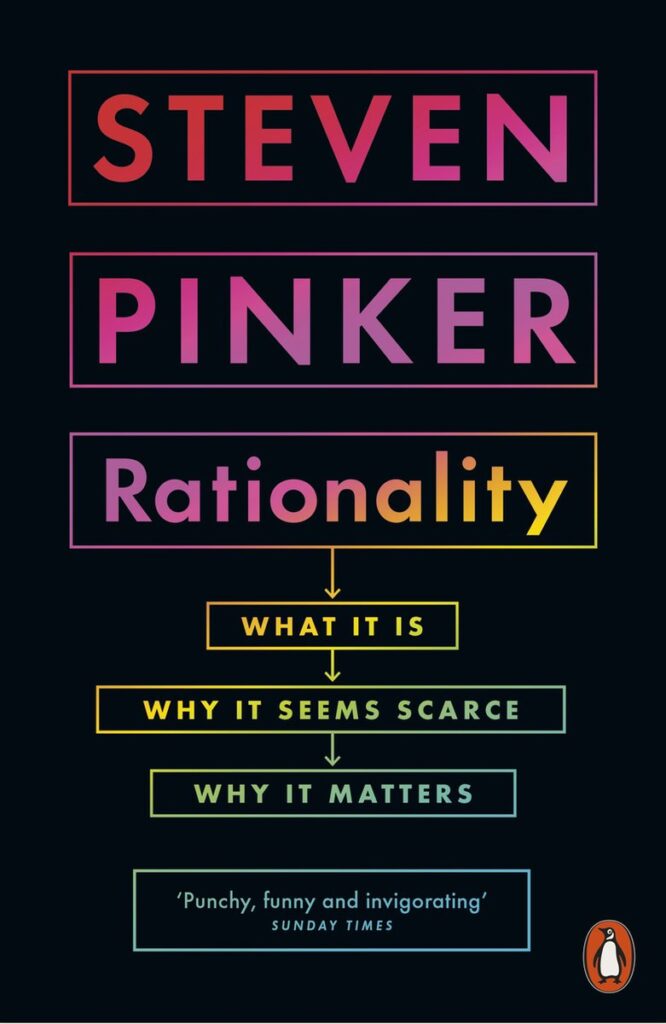
Rationality: What it is, Why it seems scarce and Why it matters - Steven Pinker
Introduction
What does it truly mean to think rationally? In Rationality: What It Is, Why It Seems Scarce, Why It Matters, Steven Pinker explores one of the most important yet misunderstood human abilities: the capacity to reason clearly in a world filled with bias, emotion, misinformation, and tribal thinking.
Drawing from psychology, philosophy, mathematics, statistics, and cognitive science, Pinker argues that rationality is not simply about intelligence or education. Instead, it is a set of tools and habits that help us navigate reality more effectively, make better decisions, and cooperate in increasingly complex societies.
Through engaging examples and accessible explanations, the book examines why irrational thinking remains so common despite humanity’s scientific and technological progress. At the same time, Pinker makes a compelling case for why reason, logic, probability, and critical thinking still matter deeply in modern life.
Rationality is a thought-provoking read for anyone interested in human behavior, decision-making, philosophy, psychology, or understanding how we can think more clearly in an age of information overload.
Why this book is recommended
Steven Pinker has the ability to write in an extremely clear and engaging way. He’s a scientist who truly embodies science communication.
Rationality: What It Is, Why It Seems Scarce, Why It Matters helps move you away from the idea that rationality turns someone into a cold, hard, fact-calculating robot. Instead, it broadens your understanding of what rationality really is and why society needs it.
If you enjoy discussions about rationality versus emotions, this is a must-read.
Book recommendation by writer Man of the House